The European Parliament officially passed a new law on September 9 aimed at reducing textile and food waste across the European Union. The new directive applies to all textile producers, from luxury brands to major retailers such as H&M and Zara. Crucially, it also targets fast fashion companies, where rapid turnover of collections and low prices come at the expense of quality and are frequently criticized for encouraging overconsumption. Brands like Shein and Temu, known for their short-lived clothing, contribute significantly to the growing volume of textile waste.
Under the new rules, textile producers will be held accountable for their products even after they hit the market. Companies will be required to cover the costs of collection, sorting and recycling of the clothes and household textiles they produce.
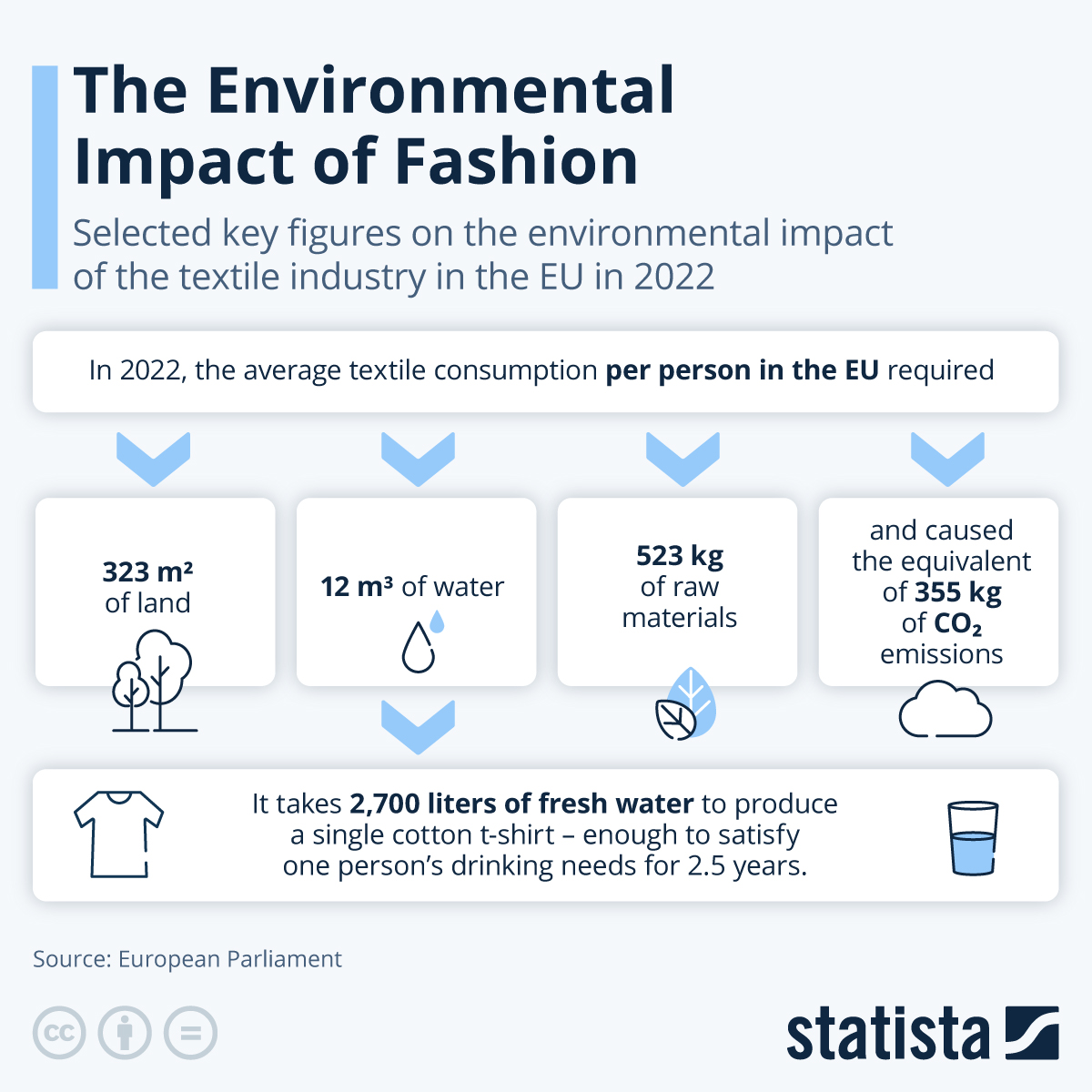
The environmental impact of the textile industry is significant. According to data published by the European Parliament, in 2022 the average textile consumption per person in the EU required 323 m² of land, 12 m³ of water and 523 kg of raw materials. The European Environment Agency also reported that in 2020, the textile sector was the third-largest contributor to water degradation and land use. Producing just one cotton t-shirt, for instance, requires 2,700 liters of fresh water - enough to meet one person’s drinking needs for two and a half years.
This infographic and article were originally authored by Valentine Fourreau in French. For the original version, please see here.