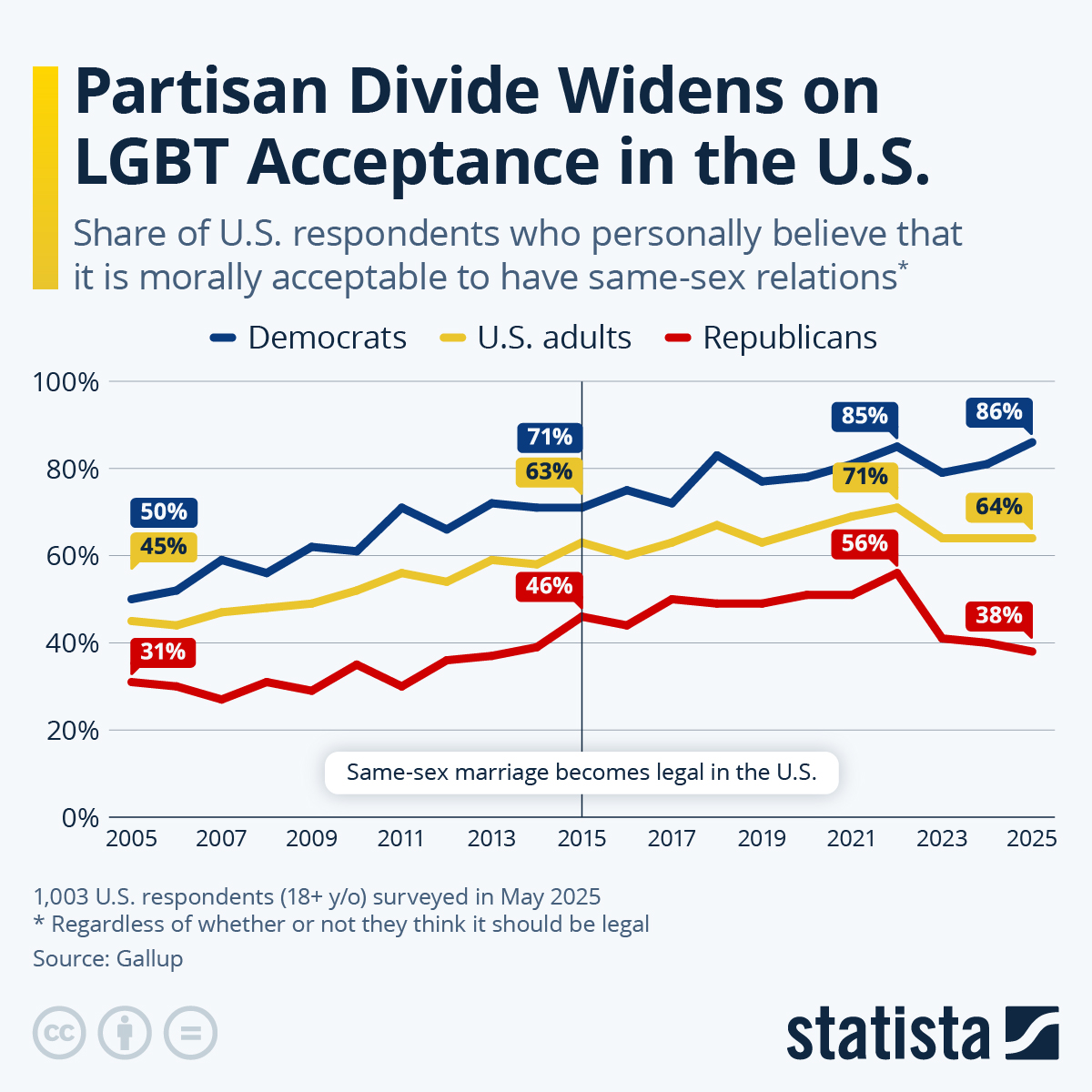
A Gallup survey conducted in 2025 reveals how the moral acceptance of same‑sex relations among U.S. adults has changed over the past two decades. The survey, which included more than 1,000 U.S. adults aged 18 and older, found that 64 percent of respondents now consider same‑sex relations morally acceptable, up from 45 percent in 2005. As shown by our infographic, acceptance has nevertheless declined from a peak of 71 percent recorded in 2022 and is now roughly at the same level as in 2015 (63 percent), the year when the United States legalized same‑sex marriage.
The survey's details also highlight a recent widening divide across political affiliations. Democrats’ acceptance rose from about 50 percent in 2005 to 85 percent in 2022 and remained high at 86 percent in 2025, while Republicans moved from 31 percent in 2005 to 56 percent in 2022 but then fell sharply to 38 percent by 2025. That produces a partisan gap of 48 percentage points in 2025 (86 vs. 38), much larger than the 25‑point gap recorded at the time of nationwide marriage legalization in 2015 (71 vs. 46). The second‑largest gaps in the series are 41 points, recorded in 2011 (71 vs. 30) and again in 2024 (81 vs. 40).
Several factors may explain this recent divergence. Gallup has noted that partisan sorting on cultural and moral issues, along with intensified political messaging and media ecosystems, can widen opinion gaps between Democrats and Republicans. More specifically, the political climate since 2022, including the prominence of campaign issues framed around identity and social norms, appears to have reinforced partisan differences. Younger and more liberal cohorts remain strongly supportive, while a portion of conservative voters have grown less accepting, contributing to the widening divide.