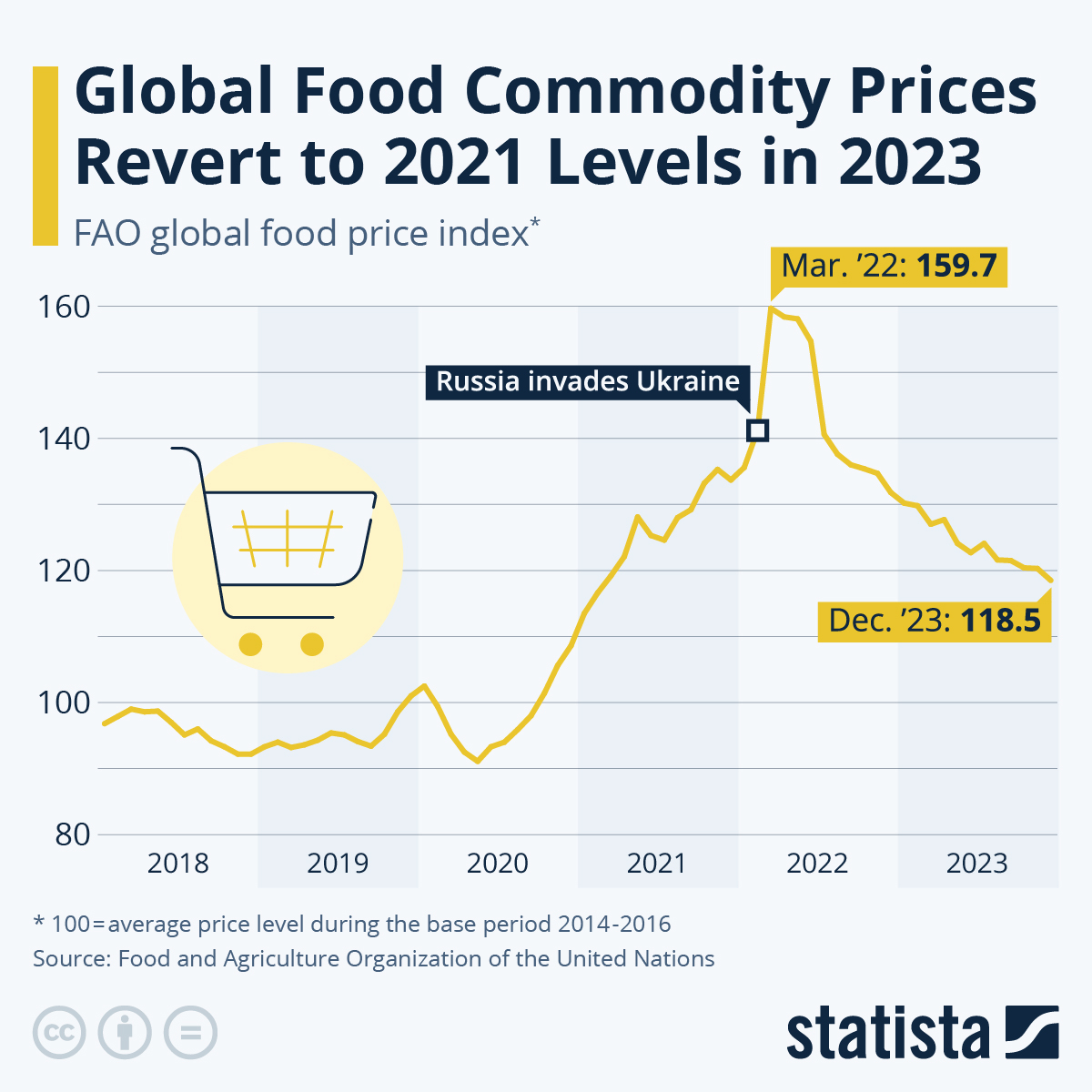
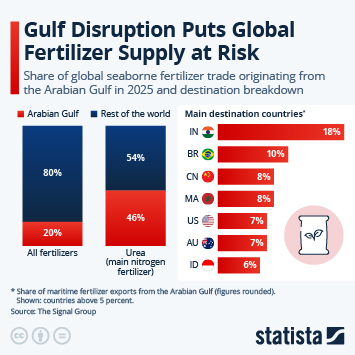
Largely driven by the ongoing conflict in Iran and its effect on energy prices, global food commodity prices increased in March. According to the Food and Agriculture Organization of the United Nations (FAO), the FAO Food Price Index climbed to 128.5 points last month, indicating a 28.5-percent increase in food prices compared to the 2014-2016 base period. While that's far below the peak of 160.2 in March 2022, shortly after Russia's invasion of Ukraine, it's up 8 percent from March 2024 and roughly 35 percent from the 2019, i.e. pre-pandemic average. As opposed to the war in Ukraine, which directly affect global cereal supplies, the conflict in the Middle East is having a more indirect effect on food commodity prices, mainly through higher energy and fertilizer costs.
"Price rises since the conflict began have been modest, driven mainly by higher oil prices and cushioned by ample global cereal supplies," FAO Chief Economist Máximo Torero said. "But if the conflict stretches beyond 40 days with high input costs with current low margins, farmers will have to choose: farm the same with fewer inputs, plant less, or switch to less intensive fertilizer crops. Those choices will hit future yields and shape our food supply and commodity prices for the rest of this year and all of the next."
After an initial decline in food prices due to a demand shock at the onset of the Covid-19 pandemic in early 2020, food prices had surged throughout 2021, as supply chain disruptions affected many goods during the pandemic and harvest setbacks also added to the development. Between April 2020 and February 2022, global food prices rose more than 50 percent, which is when things were made even worse by Russia's invasion of Ukraine and the subsequent blockage of the country's vital grain exports. Following the initial disruption of food exports from Ukraine, the Black Sea Grain Initiative and, after its end, alternative shipping routes have enabled the country to resume these vital exports, both for Ukraine's economy and global food security.
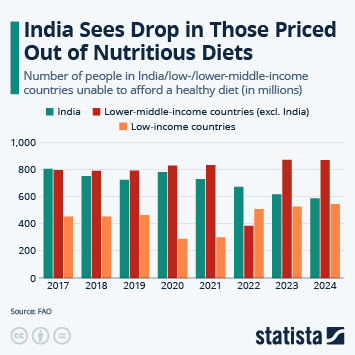
As our chart shows, food commodity prices had returned to mid-2021 levels by the end of 2023, but never fell back to the levels seen before the pandemic. In early 2024, food prices started to creep up again, worsening the outlook for global food security. According to the FAO, the average daily cost of a healthy diet climbed to $4.46 at purchasing power parity in 2024, leaving 2.6 billion people unable to afford it.