The United States has extended a waiver on sanctions forbidding the buying of Russian oil until June 17. Washington introduced the waiver in March, in an attempt to ease pressure from high fuel prices, brought about by the U.S.-Israeli strikes on Iran and subsequent disruption of shipping through the Strait of Hormuz. European sanctions on Russian oil, introduced after Moscow’s 2022 invasion of Ukraine, remain in force.
Despite Western sanctions, Russia has continued exporting crude to major buyers including China and India over the last few years. Even before Washington announced the extension, India signaled it would continue to purchase Russian oil.
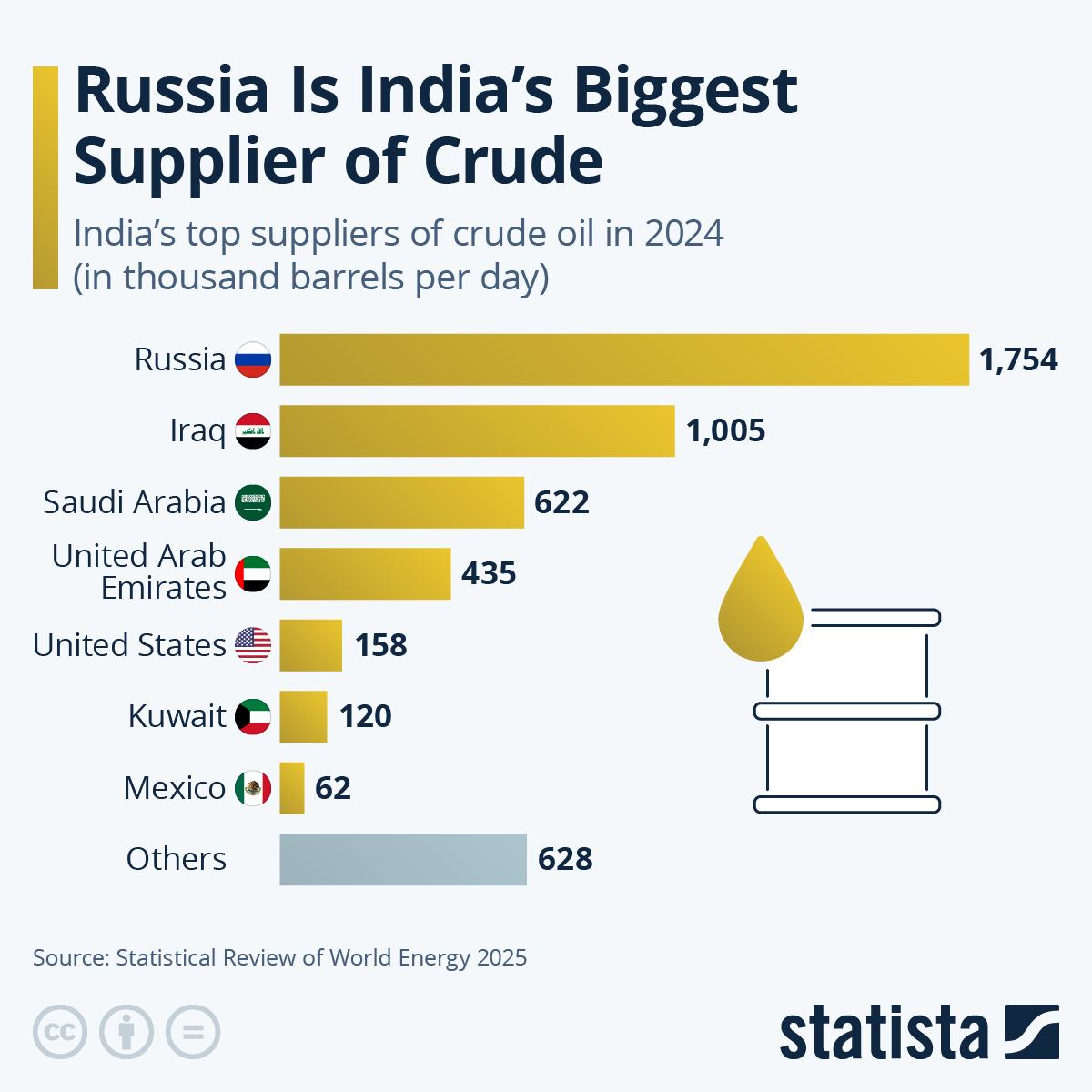
As the following chart shows, India is heavily reliant on Russian crude. According to the latest data from the Energy Institute, Russia was India’s largest crude supplier in 2024, providing more than 1.7 million barrels per day. Iraq ranked second with roughly 1 million barrels per day, followed by Saudi Arabia (622,000 bpd), the United Arab Emirates (435,000 bpd) and the United States (158,000 bpd). In total, India imported nearly 4.8 million barrels per day in 2024, with Russian crude accounting for more than a third of supplies (36.7 percent).
Reuters reports that India’s crude imports from Russia hit a record 2.25 million barrels per day in March, accounting for roughly half of total imports, as purchases from the Middle East declined. Saudi Arabia was India’s second-largest supplier, while Angola rose to third place as Indian refiners increased imports from Africa to diversify supply sources.
However, even with the increase in Russian supplies, India’s overall crude oil imports fell 13 percent in March compared to pre-war levels in February. Indian Prime Minister Narendra Modi has since responded by calling for Indian citizens to try to conserve fuel, through measures such as working from home.