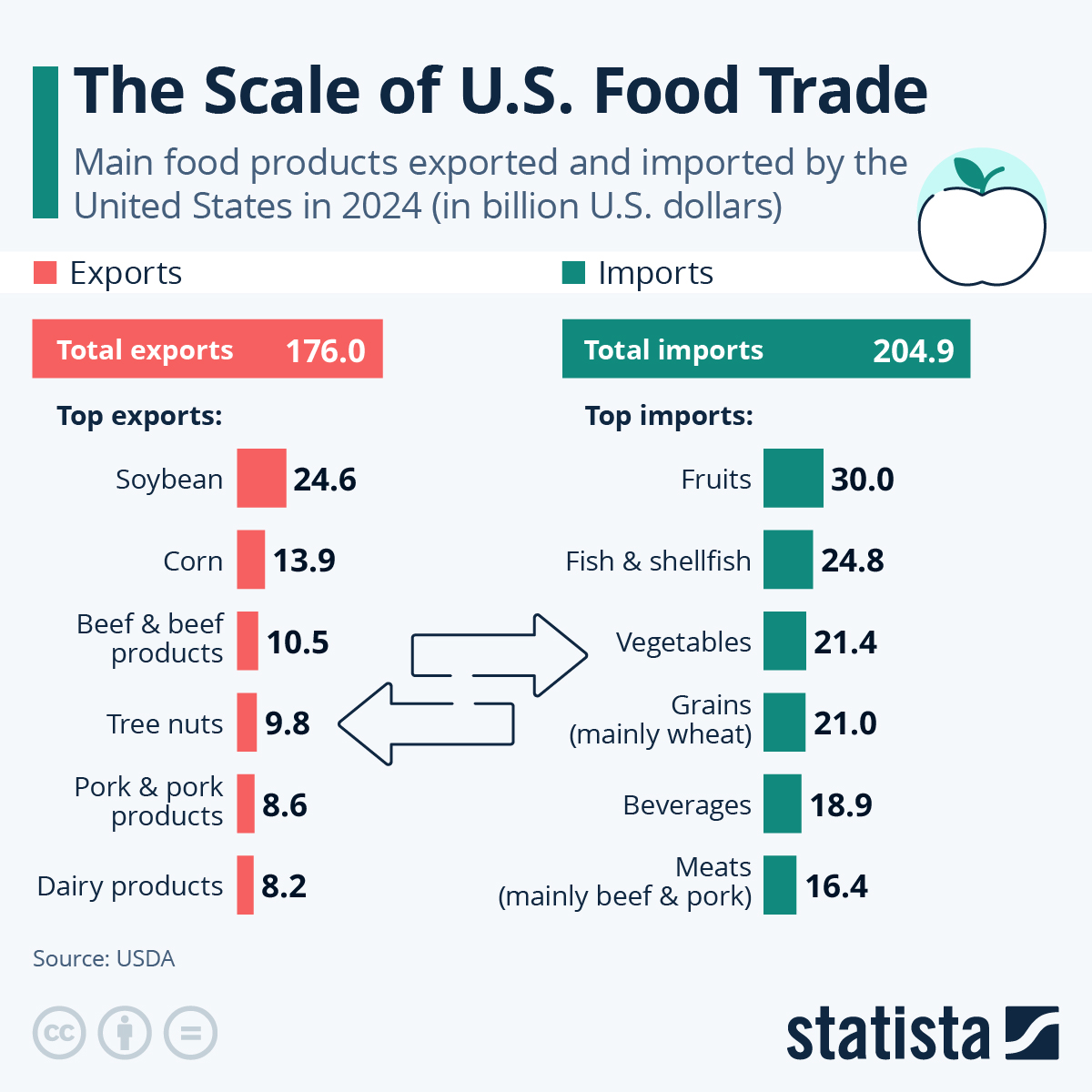
In 2024, the United States solidified its role as both a global food powerhouse and a voracious consumer. While American farms and food processors exported a staggering $176 billion worth of products, the country imported even more, totaling around $205 billion, according to the U.S. Department of Agriculture. This trade deficit in the food sector underscores a growing reliance on foreign goods, driven by shifting consumer preferences and the economic realities of global supply chains.
As our infographic shows, the U.S remains the world's breadbasket, with soybeans, corn, beef, pork, nuts and dairy leading the charge. Those six categories of products accounted for over 40 percent of the total U.S. food exports' value. Soybeans, in particular, dominate as a critical raw material in global food production, serving as a primary source of animal protein feed and the second most important source of vegetable oil.
On the flip side, America's appetite for imported foods is insatiable. The top of the U.S. imports list includes fruits, seafood, vegetables, grains, beverages and meats (mainly beef and pork), reflecting a consumer base that craves variety, convenience and year-round access to products that can't always be grown domestically. The reliance on imports, especially for seafood and tropical fruits, also reveals vulnerabilities in domestic production, from climate constraints to labor shortages. Together, the six most imported product categories accounted for nearly two-thirds of the U.S. food imports' value.