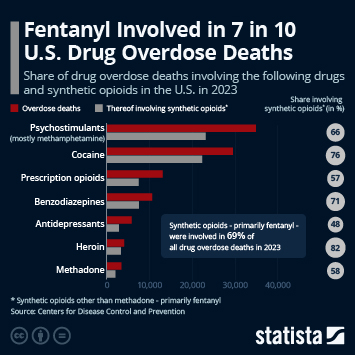
According to the latest provisional data from the Centers for Disease Control and Prevention (CDC), U.S. drug overdose deaths have come down from the peaks of the past years while remaining at high levels. Recent figures suggest a notable decline to around 70,000 annual fatalities in 2025, following a peak of nearly 110,000 in 2023. Still, synthetic opioids, primarily fentanyl, continue to be the main driver of overdose mortality, involved in more than half of the U.S. cases and underscoring the scale and persistence of the crisis.
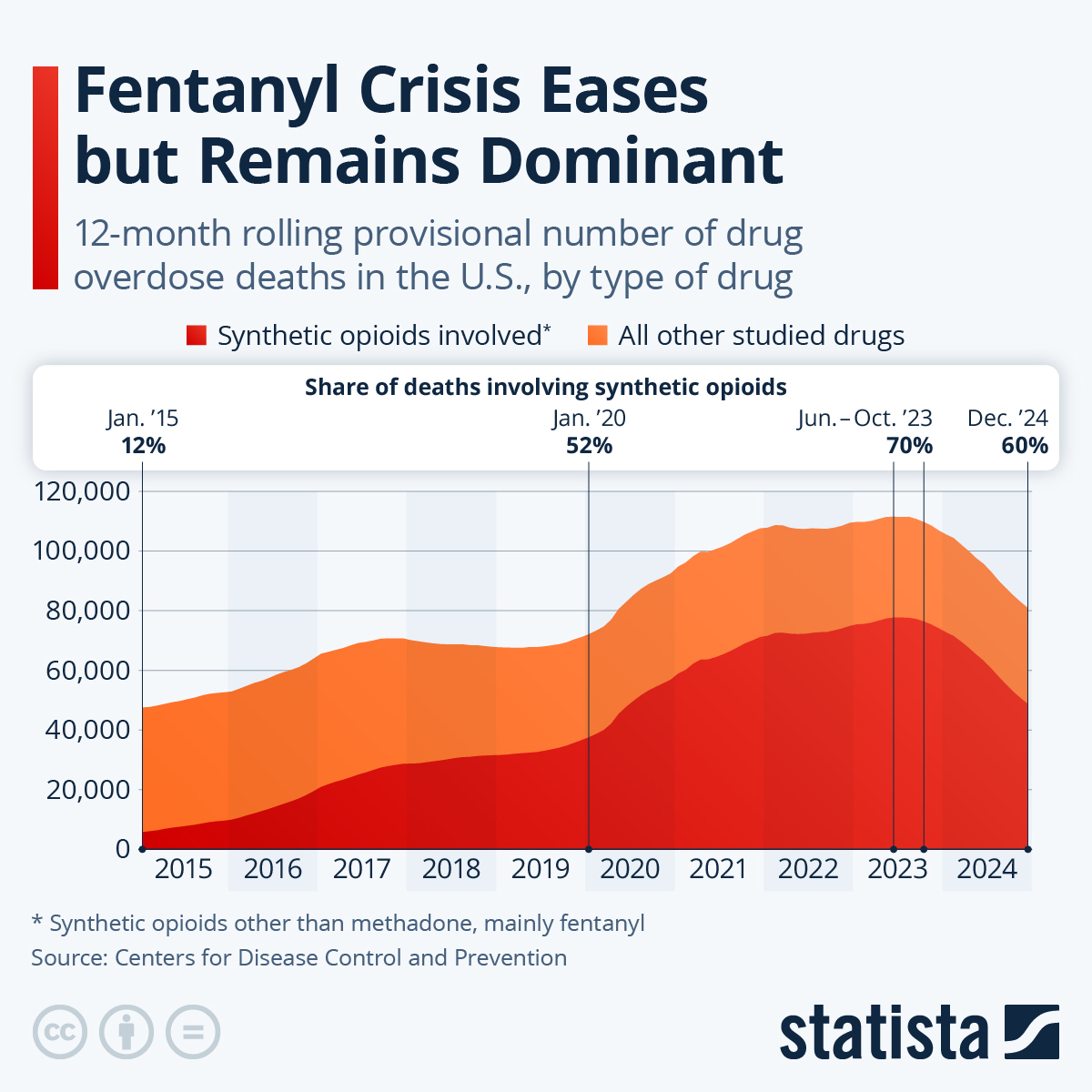
As our chart shows, the role of synthetic opioids has grown dramatically over the past decade. In early 2015, fentanyl and related substances were involved in just 12 percent of all drug overdose deaths. This share rose steadily in the following years, surpassing 50 percent by early 2020 and reaching around two-thirds of overdose deaths by 2021-2022, as the Covid-19 pandemic exacerbated the situation. At its peak in 2023, synthetic opioids accounted for roughly 70 percent of all overdose fatalities in the country, highlighting how decisively fentanyl has overtaken other drugs, in part because its extreme potency makes it cost-effective to mix into other drugs, thereby increasing the risk of overdoses.
The underlying trend reflects both a sharp increase in deaths linked to synthetic opioids and a relative stabilization, or even decline, of fatalities involving other substances. Deaths involving fentanyl surged from fewer than 6,000 per month in early 2015 to more than 75,000 annually by 2023 (12-month rolling totals), while deaths linked to other drugs remained broadly flat or declined slightly over the same period. However, the latest provisional CDC data point to a potential turning point. Throughout 2024, overdose deaths involving synthetic opioids declined from around 72,700 in January to below 50,000 by December (rolling totals), bringing their share of total overdose deaths down to about 60 percent. While this marks a notable improvement, fentanyl remains at the center of the U.S. overdose epidemic.
Public health experts attribute the recent decline to a combination of factors, including expanded access to naloxone (a medication used to reverse opioid overdoses), increased public awareness, intensified prevention efforts and shifts in drug supply.