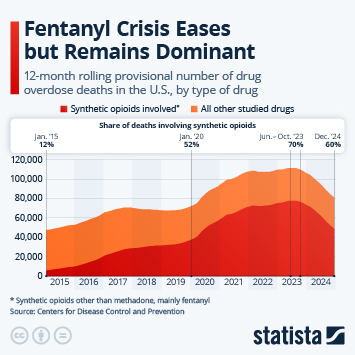
Fentanyl is the central driver of the U.S. opioid crisis, accounting for roughly 60 percent of all overdose deaths by the end of 2024, according to the most recent provisional data from the Centers for Disease Control and Prevention (CDC), down from a peak of 70 percent recorded the previous year. In 2023, the United States recorded more than 100,000 overdose deaths, a historic high, although the latest figures suggest the situation is beginning to improve. Much of this surge occurred in the wake of the pandemic, when fatalities jumped sharply from about 71,000 in 2019 to more than 92,000 in 2020, with synthetic opioids like fentanyl accounting for the vast majority of cases.
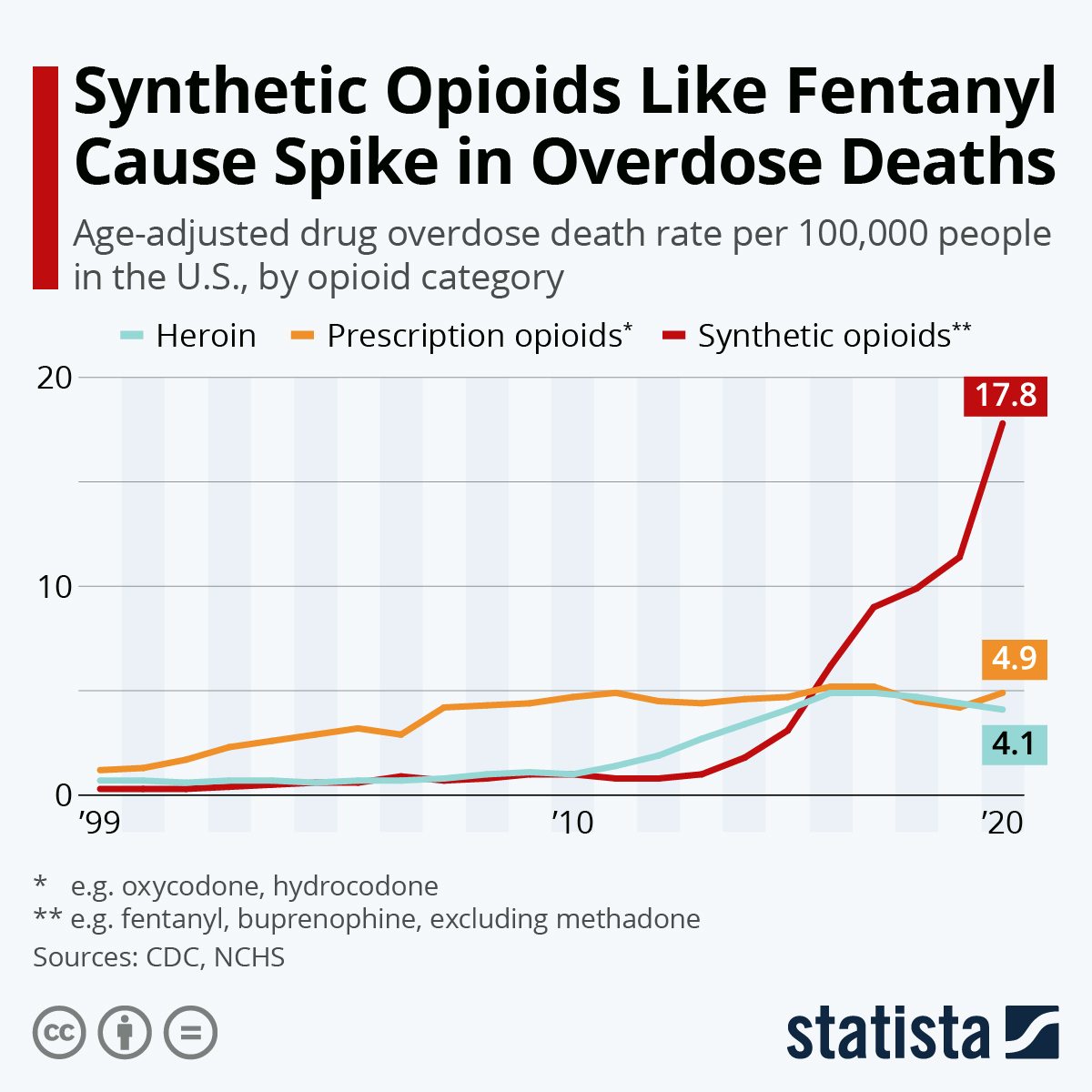
As our chart based on final CDC data shows, fentanyl’s role in the crisis has grown dramatically over time. While overdose death rates linked to heroin and natural or semi-synthetic prescription opioids peaked in the early 2010s and have since declined, deaths involving synthetic opioids (primarily fentanyl) have surged since the mid-2010s. By 2023, the age-adjusted death rate linked to fentanyl had reached 22.2 per 100,000 people, compared to 3.8 for prescription opioids and 1.2 for heroin.
This sharp rise is closely tied to fentanyl’s extreme potency, estimated to be 50 to 100 times stronger than morphine, while heroin, by comparison, is roughly twice as potent as morphine. Since a very small amount of this drug is enough to produce powerful effects, inaccuracies or errors in dosage often lead to a fatal outcome (just 2 milligrams can be lethal). Fentanyl is often mixed into heroin, counterfeit prescription pills or other illegal substances, sometimes without users’ knowledge, significantly increasing the risk of overdose. As a result, fentanyl has overtaken other opioids by a wide margin and now represents the most lethal component of the U.S. overdose epidemic.